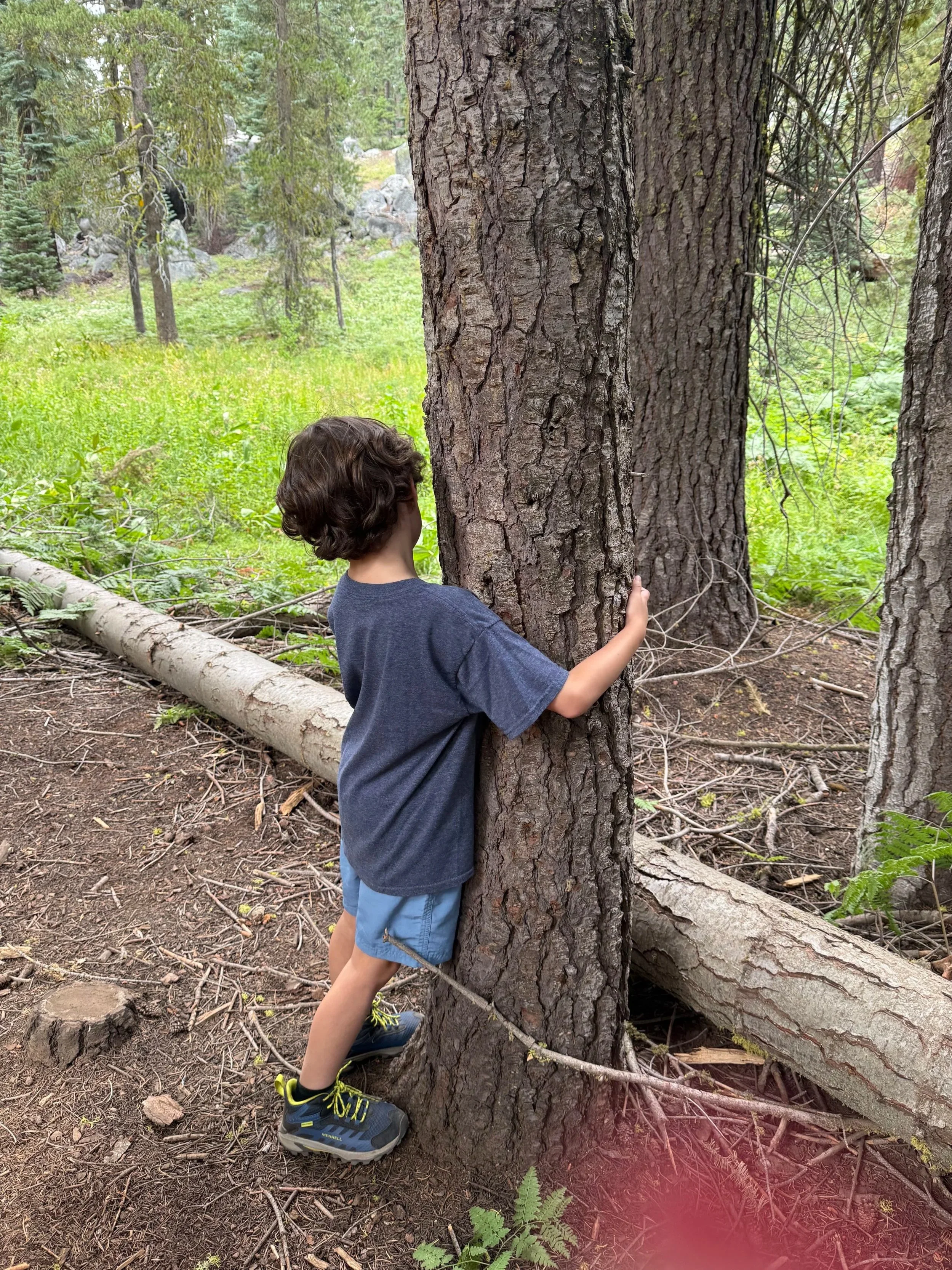
National Parks Belong to Our Children, Too
We just spent the most magical week in Yosemite.
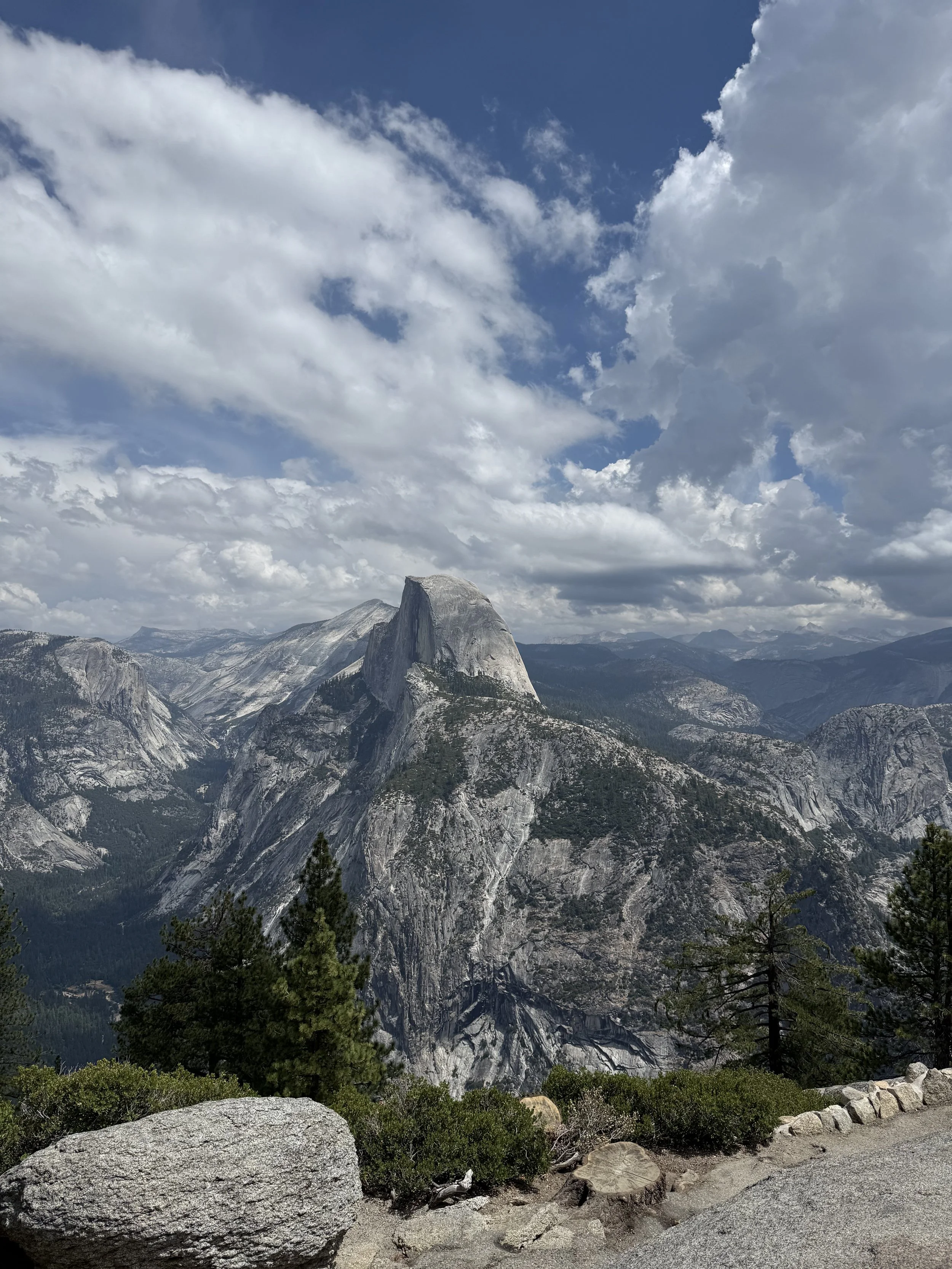
And yes, the park itself was breathtaking. The granite cliffs, waterfalls, giant trees, and views that made us stop in our tracks were every bit as beautiful as people say they are. There is something profoundly humbling about standing in a place that has existed for millions of years. Your problems feel smaller. Your breathing slows down. You remember that the world is much bigger than your calendar, your responsibilities, and the endless list of things waiting for you at home.
But the thing that made our week truly magical wasn’t just Yosemite. It was that our son got to be completely himself.
No apologies. No explanations. No feeling as though we needed to make him smaller, quieter, or more convenient for the people around us. He could move the way he needed to move. He could make the sounds he needed to make. He could experience the park in his own way and at his own pace. Nobody made us feel as though we were taking up too much space.
Instead, people were kind. So, so kind.
They smiled at him. They gave him room when he needed it. They treated him like a person who belonged there, because he did. I don’t know if families without a disabled child can fully understand how much that means.
The Invisible Work Behind the Magic
When you are parenting a child with a disability, you become accustomed to scanning every environment before you can relax in it.
Is it safe? Is it crowded? Is there a bathroom nearby? Is there a place to take a break? Will people understand? What happens if he becomes overwhelmed? Are we going to have to explain ourselves to a stranger today?
And for our family, safety planning is not a small footnote tucked somewhere near the bottom of the packing list. It shapes nearly every decision we make.
Before we arrived, we assessed where we would be staying and what floor our room would be on. Camping was a hard no for our expert escape artist. Sleeping in a thin piece of fabric with a zipper as the primary security system did not exactly inspire confidence.
We also thought carefully about which trails we would explore. Yosemite is famous for its cliffs and dramatic views. Those are beautiful—but when you are traveling with a child who may not recognize danger or respond reliably in an emergency, “dramatic cliffside trail” is not necessarily the selling point other people think it is.
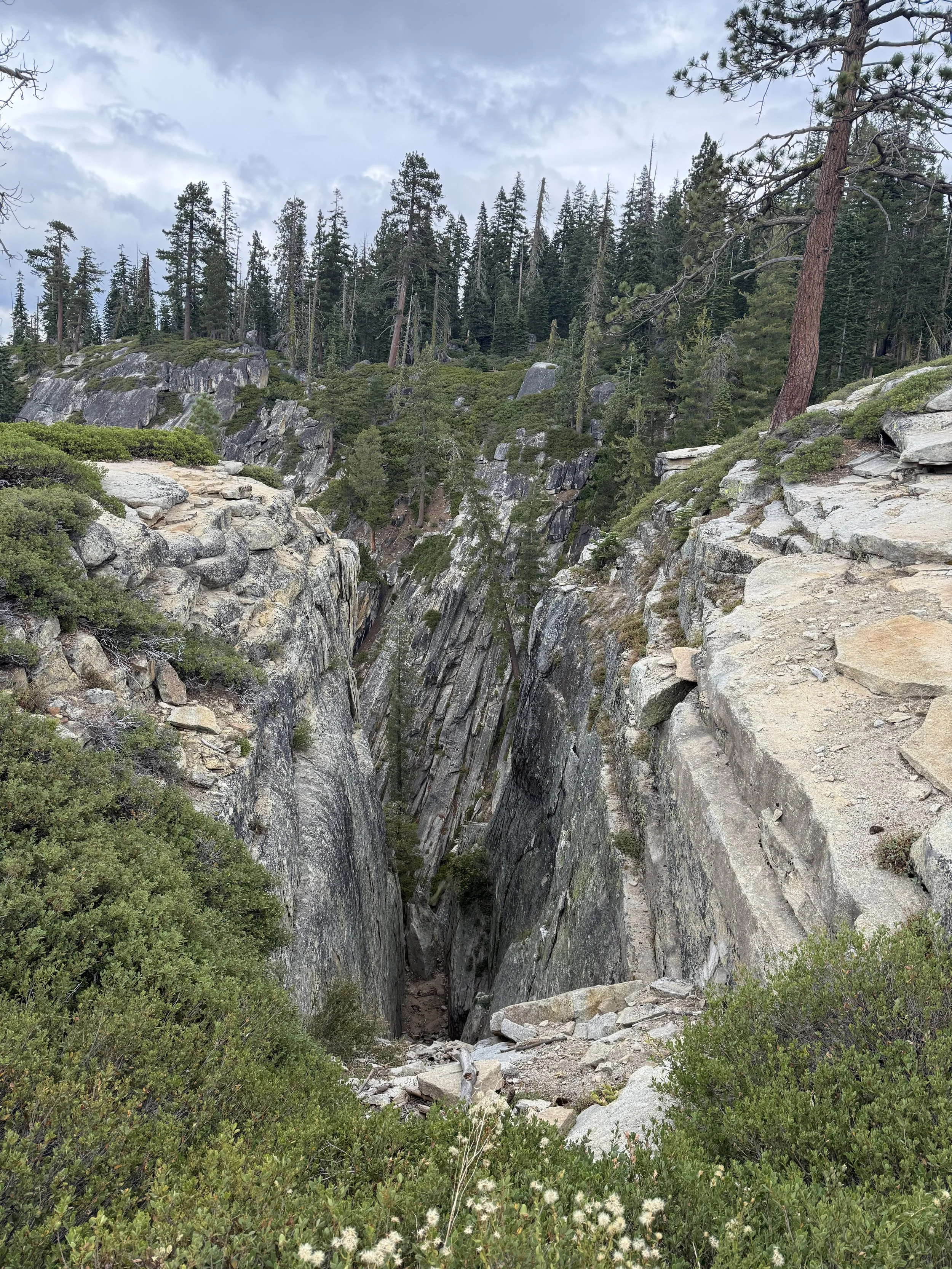
This one still keeps me up at night. These are the “fissures” near Glacier Point. We stumbled upon this during an impromptu hike to Taft Point. 0/10 do not recommend if you have a kiddo like mine!
We (tried to) deliberately choose trails and areas that kept us far away from cliffs and other hazards. We looked at maps differently. We evaluated lodging differently. We planned our days differently.
There can be so much invisible work involved in taking a family trip. There is the packing, scheduling, anticipating, and backup planning that all families do—and then there is the extra layer disability families carry with them.
We prepare for sensory needs, communication needs, food needs, disrupted routines, unfamiliar environments, and long waits. We consider whether doors lock securely, whether water is nearby, whether a path leads toward a dangerous drop, and how quickly we could reach our child if he suddenly ran. I took the above picture while my husband had a death grip on our son’s hand. We left that area very, very quickly. Lesson learned.
Even when we look relaxed, there is often a part of our brain quietly calculating several steps ahead.
That planning is what makes the relaxing moments possible. It allowed us to create a Yosemite trip that was safe and joyful for our son—not a version of Yosemite designed around what we thought we were supposed to do.
Yosemite Our Way
On days one and two, we spent the majority of our time splashing in the very cold Merced River. And when I say very cold, I mean the kind of cold that makes the adults question every decision that led them into the water while the children appear completely unbothered.
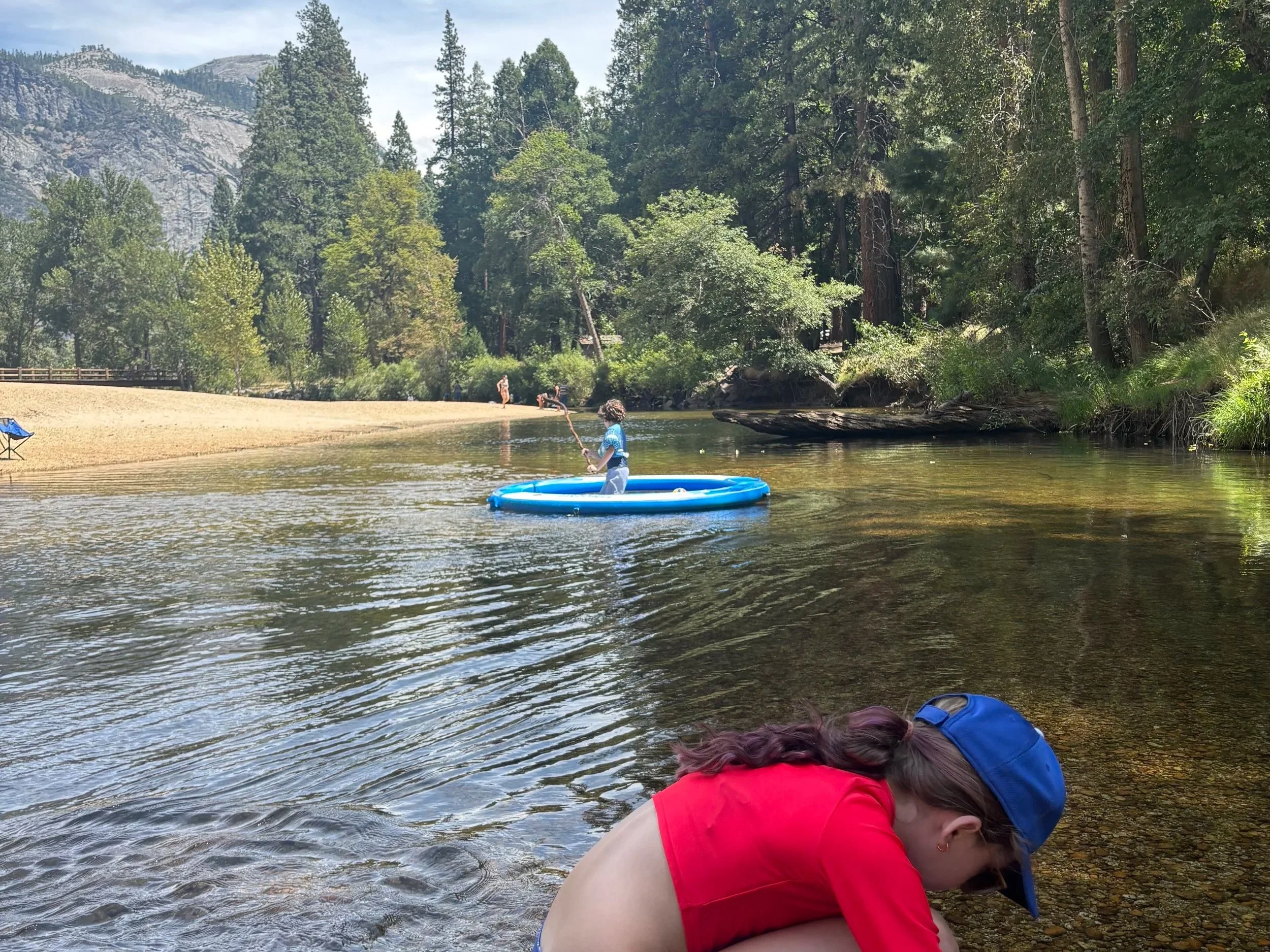
We learned how to skip rocks. We examined rocks. We threw rocks. We identified the differences between igneous, sedimentary, and metamorphic rocks with the help of a very cool rock-identifying app.
There were a lot of rocks.
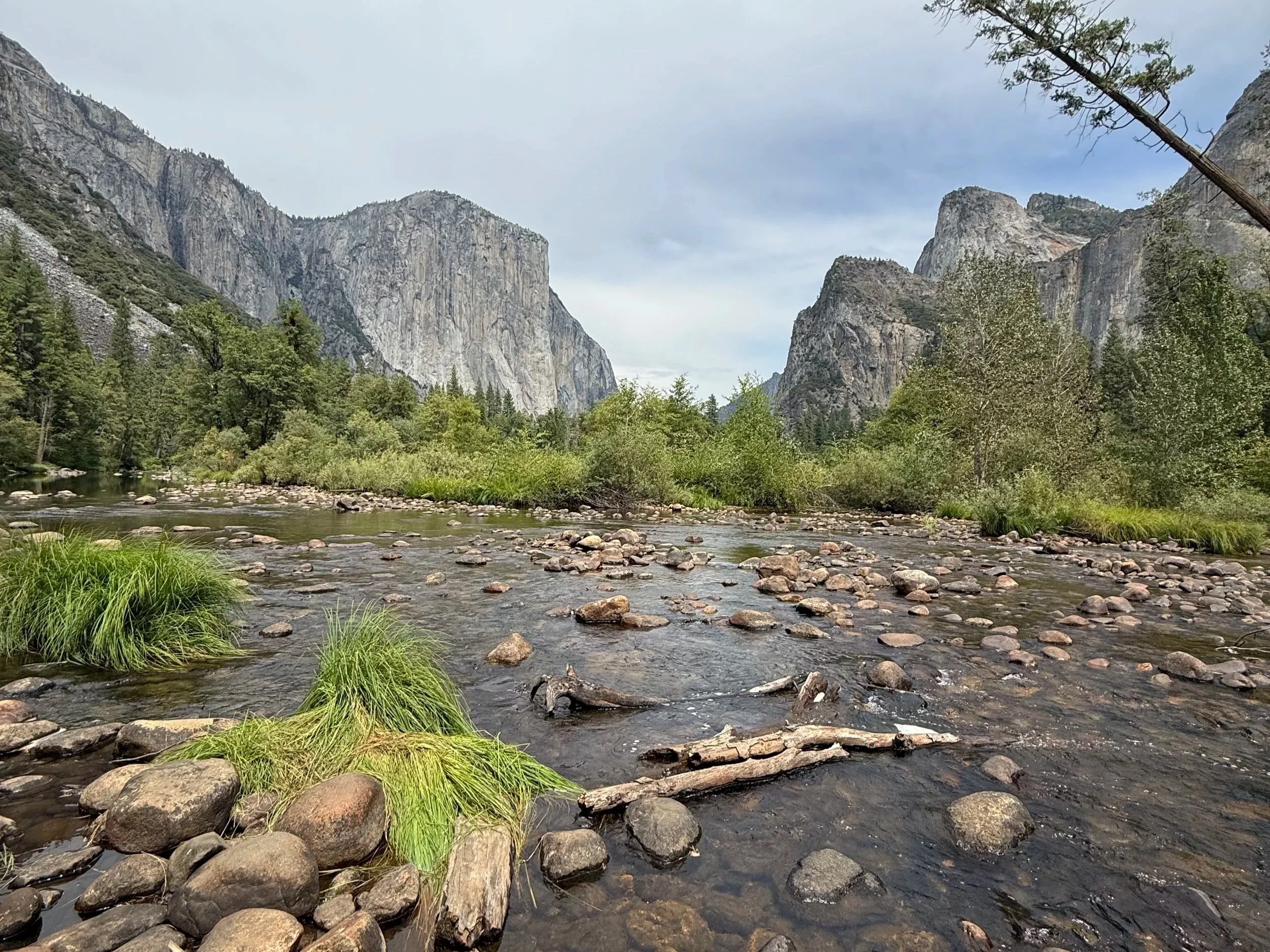
We weren’t racing from one landmark to another. We weren’t trying to complete a list of Yosemite’s top ten attractions. We weren’t worried about whether we were maximizing every minute. We were just having fun—the four of us.
On days three and four, we hiked. We took the kids on their scooters around the valley floor. We wandered into meadows. We threw more rocks into more bodies of water, because apparently that was the unofficial theme of our Yosemite vacation.
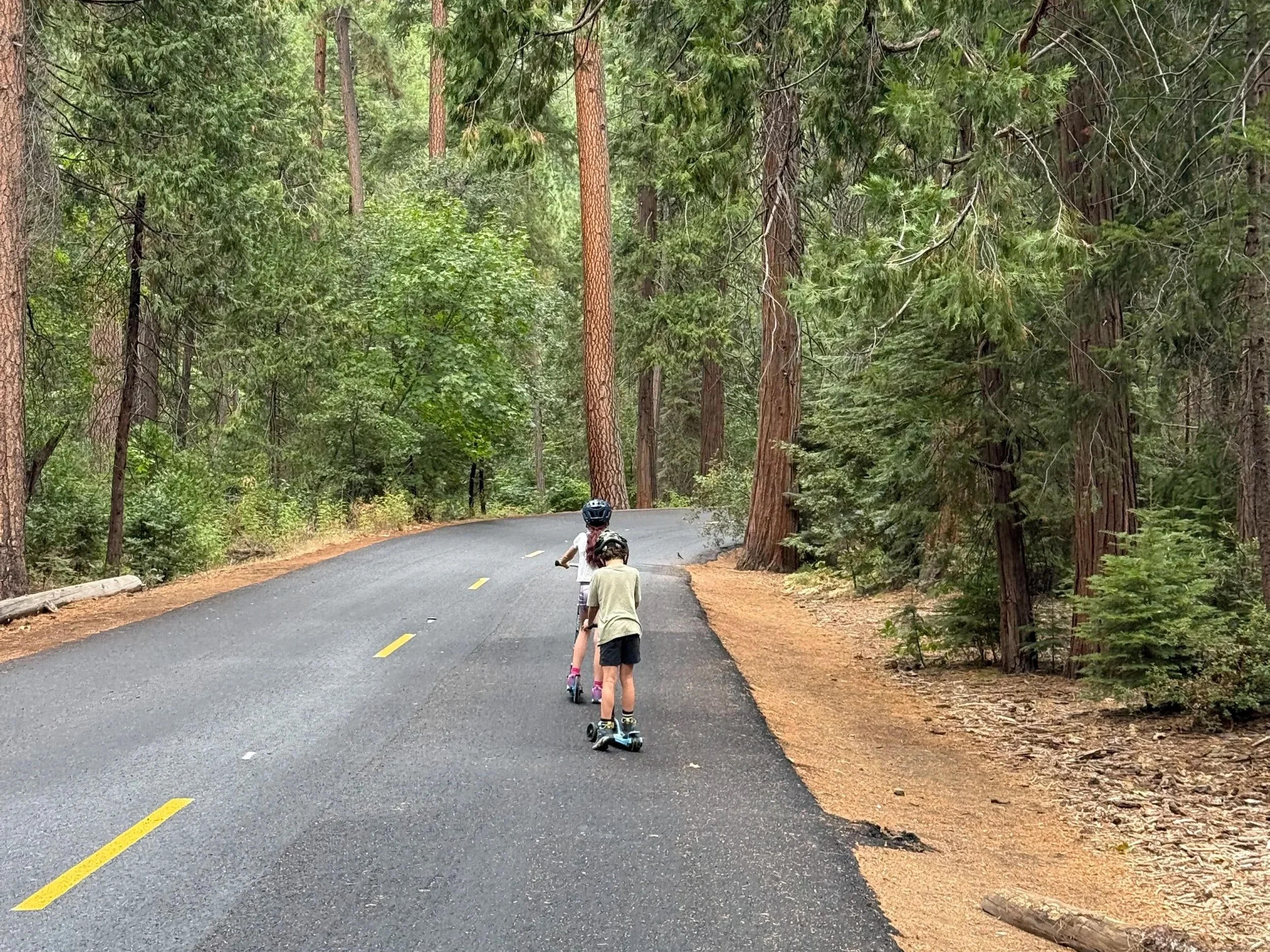
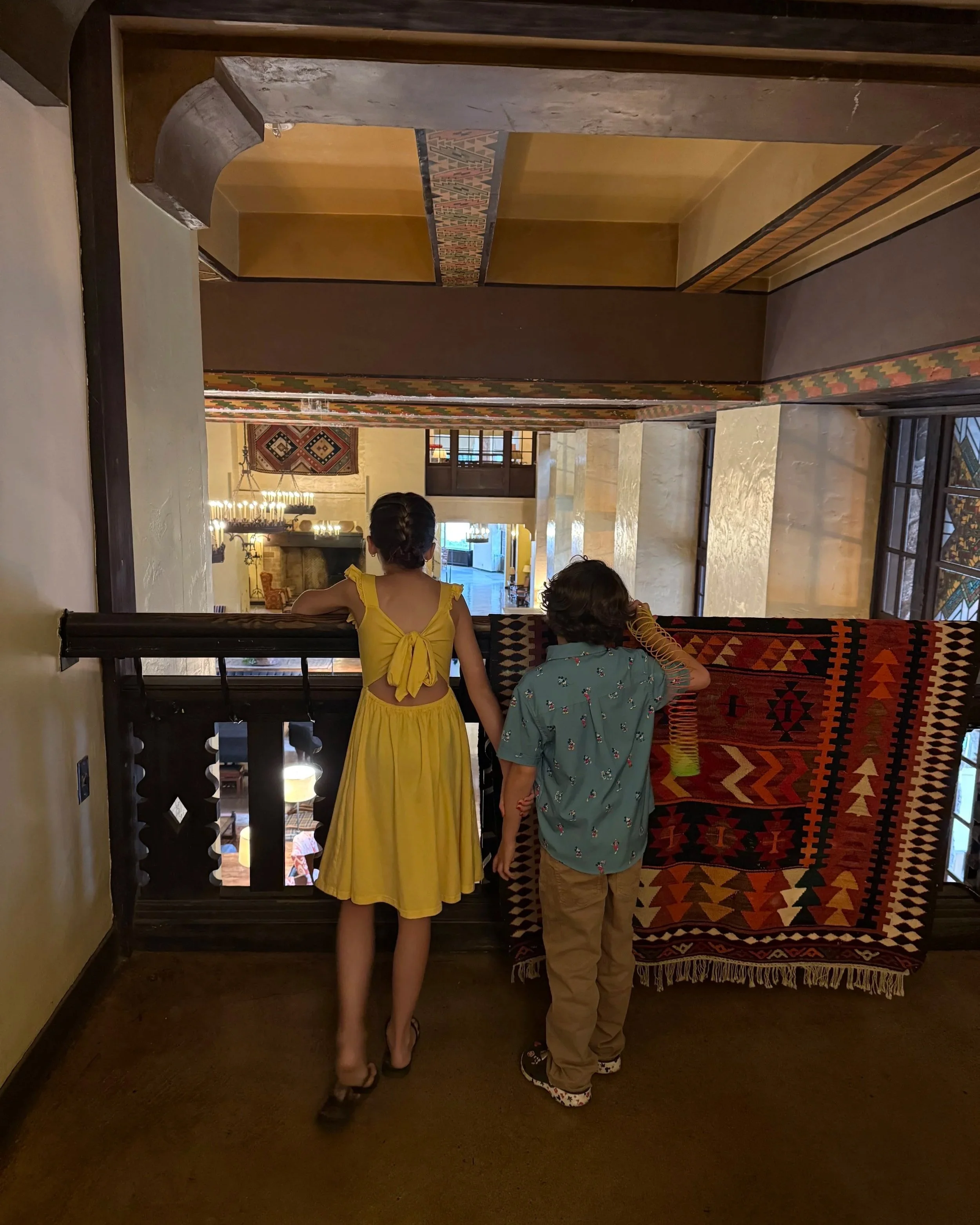
Each afternoon, we went back to the hotel. The kids got ice cream, and we got a cocktail. Then came showers, dinner, and early bedtimes.
Honestly, it was perfect.
We didn’t stay out until sunset just because that was when someone said the view would be best. We didn’t push through exhaustion so we could say we had done one more trail. We didn’t force ourselves to follow an itinerary created for a completely different family. It was Yosemite our way. It was Yosemite our son’s way. And it was Yosemite in a way that made no excuses for what we chose to do—or not do—that day.
There were no expectations about the “right” way to experience the park. We didn’t need our son to react to a view a certain way or pose perfectly for every family picture. We didn’t need to rush him from one destination to the next to make sure we got our money’s worth. We could walk, stop, splash, scoot, throw rocks, eat ice cream, and adjust. We even taught our daughter how to play Phase 10, Battleship, and Uno “no mercy”. The ruthless nature of those three games left us in hysterics every day, while our son was able to unwind on his iPad after a hike.
In this space, we could simply be together. That is rarer than it should be.
A Place Without Goals
As parents, we spend so much time thinking about therapies, schools, goals, appointments, and progress. We are constantly asked what our children are working on and what skill comes next. All of those things have their place, but our children also deserve time when nobody is trying to teach them, assess them, redirect them, or change them. They deserve opportunities to exist in the world exactly as they are.
Our week in Yosemite reminded me how important it is for our son to have experiences that aren’t about autism—even though autism comes with us everywhere we go. He wasn’t a collection of goals or deficits. He wasn’t a problem that needed to be solved. He was a kid on vacation with his family.
He was simply himself.
And we weren’t an autism family trying to navigate another complicated outing. We were simply a family enjoying one another.
A Resource More Families Should Know About
Our national parks can be an incredible resource for people with disabilities, in part because of the America the Beautiful Access Pass.
The Access Pass is a free lifetime pass for United States citizens and residents of any age who have been medically determined to have a permanent disability that severely limits one or more major life activities. The disability does not have to be visible, and a person does not need to be considered “100 percent disabled” to qualify.
At sites that charge an entrance fee per vehicle, the pass generally covers the passholder and everyone traveling with them in one noncommercial vehicle. At sites that charge per person, it generally covers the passholder and up to three additional adults; children under 16 are admitted free.
The pass may also provide discounts on certain amenities, although those benefits vary by location. It does not necessarily cover things such as camping reservations, concession-operated services, or special recreation permits.
Families can obtain a physical pass in person at participating federal recreation sites or order one by mail. A digital version is also available. Documentation of a qualifying permanent disability is required, so it is worth reviewing the current requirements before applying. The National Park Service has official Access Pass information and application options here.
This is one of those resources many eligible families may not know exists. The pass doesn’t eliminate every barrier to travel, and free park admission certainly doesn’t make a family vacation free. There are still transportation costs, lodging, food, equipment, time away from work, and all the logistical challenges that come with traveling as a disability family.
But it removes one barrier, and removing one barrier matters.
It tells disabled people and their families that these public spaces belong to them, too.
Access Is About More Than Admission
Of course, true accessibility is about much more than whether someone can enter a park for free.
It means having accurate information before a visit. It means accessible paths and bathrooms, safe places to rest, clear signage, patient staff, and options for people with different physical, sensory, cognitive, and communication needs.
It also means creating a culture in which disabled people are welcomed—not merely accommodated.
A ramp can provide physical access to a building. A pass can provide financial access to a park. But kindness provides another kind of access altogether: the freedom to participate without being made to feel like a burden.
That was the gift people gave our family in Yosemite.
Every patient interaction and every simple smile communicated the same message:
You are welcome here.
Nobody expected our son to earn his place by appearing less autistic. Nobody required him to perform gratitude or joy in a way they recognized. He didn’t have to prove that he understood the significance of the scenery around him.
He was allowed to experience it as himself. That should not feel extraordinary, but sometimes it does.
More Places Where Families Can Exhale
I came home from Yosemite feeling grateful, restored, and a little emotional. I was grateful for the beauty we witnessed, but even more grateful for the way our family felt while we were there. We spent real time together. We stepped outside our normal routines. We watched our son explore the world without asking him to apologize for how he moved through it.
There will always be places where we have to prepare more carefully. There will be environments that are too loud, too crowded, too rigid, too dangerous, or simply too unkind.
We will continue to do the invisible planning that allows our family to participate in a world that was not always designed with our son in mind.
But now we also have this week. A week of mountains, meadows, scooters, ice cream, cocktails, and an impressive number of rocks thrown into an impressive number of bodies of water.
A week of safety, kindness, family, and freedom. A week when our son could simply be himself.
And now, we can’t wait to decide which national park we will explore next. We know every trip will require its own research, safety planning, flexibility, and probably an unreasonable number of snacks. But Yosemite showed us what is possible when we build the experience around our family instead of trying to make our family fit someone else’s idea of the experience.
I hope more disability families learn about the Access Pass and discover the possibilities within our national parks and federal recreation lands. Not every park or experience will work for every person, and accessibility can look very different from one family to another. But these spaces belong to our children, too.
They belong to the child who hikes every trail and the child who experiences the scenery from the car. They belong to the child who talks excitedly about every waterfall and the child who communicates their joy without words.
They belong to families who follow the suggested itinerary and families who spend two days throwing rocks into a river. There is no single right way to experience nature. There is no single right way to be a family. And there is no single right way to be human.
Sometimes the most meaningful kind of inclusion is simply being able to show up, take a deep breath, and know that no apology is necessary.